The Leiden years
Born on the Weddesteeg in 1606, Rembrandt attended the Latin School, briefly enrolled at the university at fourteen, and then chose an apprenticeship instead. By 1625 he had his own studio, sharing models and ideas with Jan Lievens; the small, sharply lit history pieces of those years already show the light he became famous for.
Where to see his Leiden
- Weddesteeg: the site of his birthplace, marked by a monument on the Rhine.
- The Young Rembrandt Studio on the Langebrug, in the building where he worked.
- Museum De Lakenhal, for Leiden painting of his generation.
- The Latin School on the Lokhorststraat, still a school building today.
Why he still matters here
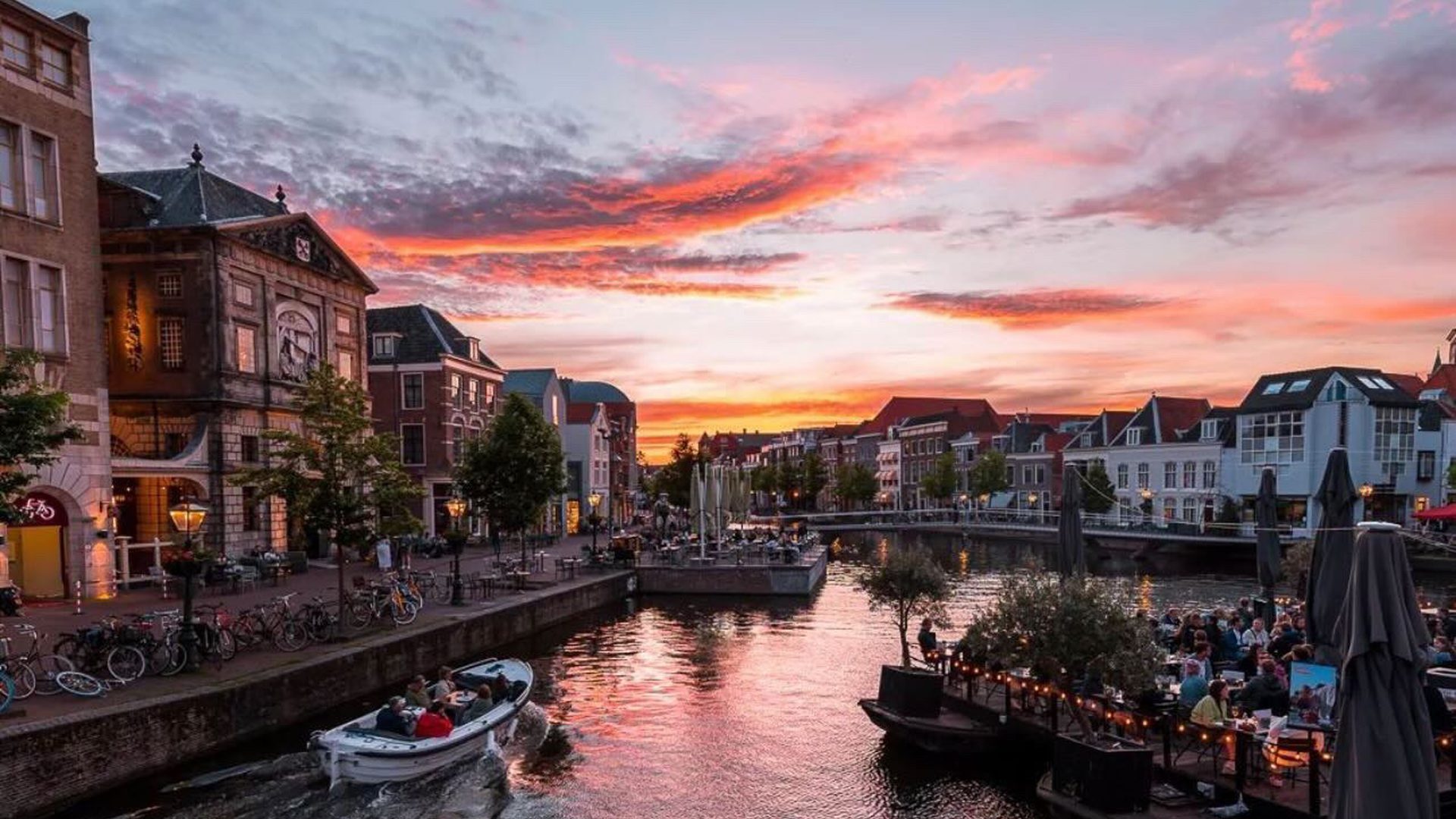
Leiden trained him and then lost him to Amsterdam in 1631, which is very much a Leiden story: the city produces, the country profits. Walk the Weddesteeg at dusk and the light coming off the water explains more about his paintings than most museum labels do.
Where Rembrandt's Leiden years become visible
Rembrandt was born in Leiden in 1606 and trained here before moving to Amsterdam. His birth house no longer survives, so the strongest visit combines Weddesteeg and the nearby Young Rembrandt Studio with the streets, university world and museum collections that explain his early environment.
Treat the route as context rather than a preserved artist's home. Plaques, reconstructed interpretation and the scale of the old city help connect his childhood to the painter he became. Check museum access separately before travelling.
Frequently asked questions
- Can you visit Rembrandt's birth house in Leiden?
- No. The original house is gone. Weddesteeg marks the area, while nearby interpretation and Museum De Lakenhal provide historical context.
- How long did Rembrandt live in Leiden?
- He was born in Leiden in 1606 and worked here during his formative years before establishing himself in Amsterdam in the early 1630s.
Continue exploring Leiden
- Leiden museumsDiscover 13 museums in Leiden, from Naturalis and the National Museum of Antiquities to De Lakenhal, Boerhaave and De Valk, with tickets and visitor tips.
- Jan van HoutJan van Hout survived the siege of 1574, reorganised the city and helped secure Leiden's university in 1575. Where to see his work in the city today.
- Herman BoerhaaveHerman Boerhaave turned Leiden into the medical capital of 18th-century Europe with bedside teaching. His city: the Caeciliahospital, the Hortus and his grave.
- PieterskerkDiscover Pieterskerk Leiden: 900 years of history, Gothic vaults, ancient grave stones and stories of the Pilgrims and Rembrandt, with visitor information.