Siege and survival
During the Spanish siege of 1574, with a third of the population dead of plague and hunger, Van Hout kept records, rationing and morale together until the dikes were cut and the relief fleet reached the city on 3 October.
Building an institution
- Helped draft the plans for the university granted in 1575.
- Modernised the city archives — one reason Leiden's history is so well documented.
- Promoted printing and poetry in Dutch rather than Latin.
- Laid out new neighbourhoods for refugees from Flanders.
Where to see it
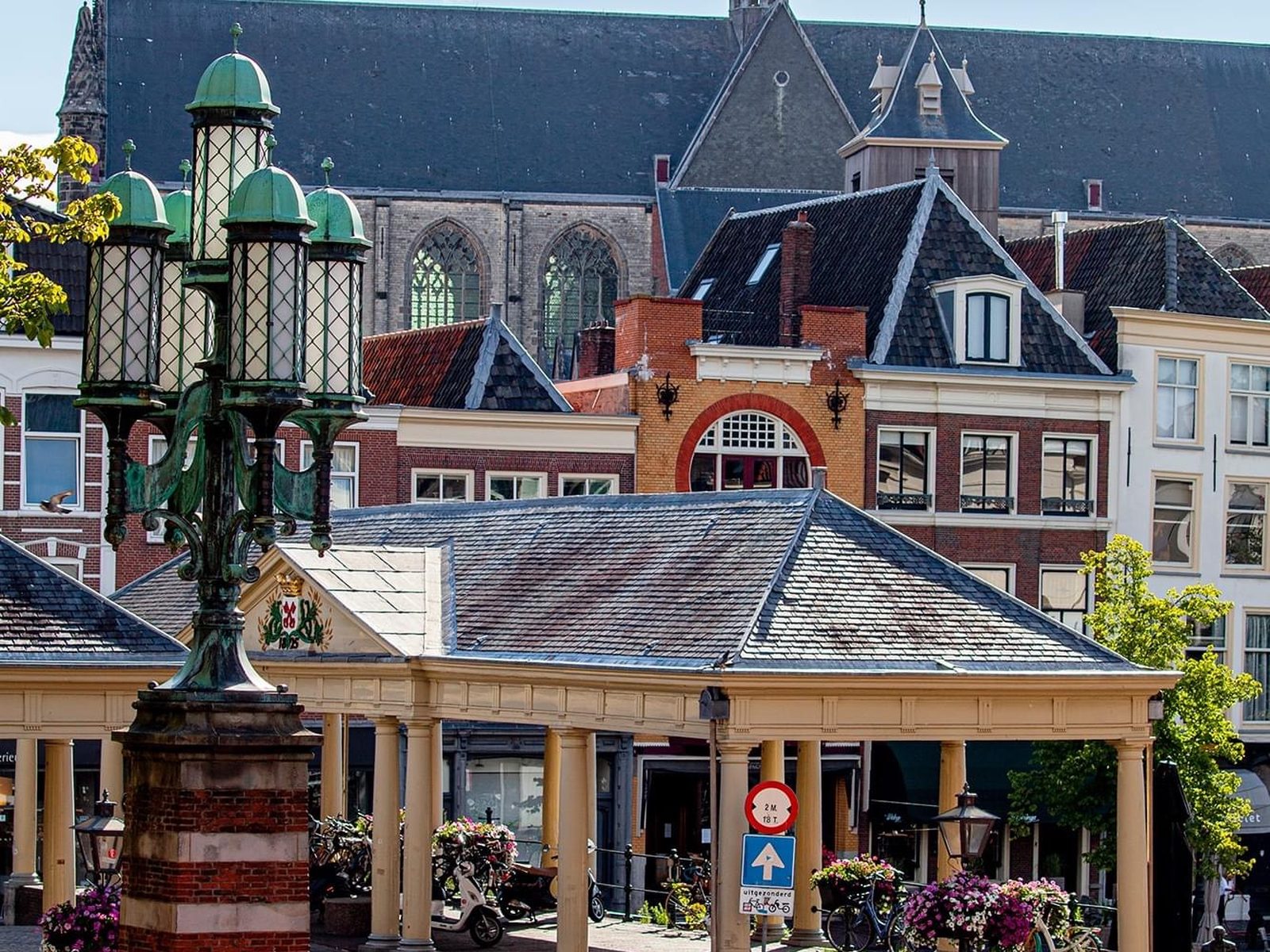
Start at the Academy Building on the Rapenburg, the university's original home, then walk to the Stadhuis on the Breestraat and the Pieterskerk. The 3 October festival is his legacy too: a city that celebrates a rescue with herring and white bread has a long memory.
Understand Jan van Hout through Leiden's relief
Jan van Hout was city secretary during the 1574 siege and became closely associated with Leiden's civic memory, administration and cultural life. His story makes most sense alongside the town hall, Pieterskerk and the annual 3 October traditions rather than as an isolated biography.
Use the old centre as the source: distances between the civic buildings, churches and waterways show how compact the besieged city was. For documents and deeper historical context, consult Erfgoed Leiden or the collections linked from Leiden's institutions.
Frequently asked questions
- Who was Jan van Hout?
- He was Leiden's city secretary during and after the 1574 siege, as well as a poet and an important organiser of the city's administration and culture.
- How does Jan van Hout connect to 3 October?
- His work belongs to the civic history behind Leiden's relief, which the city still commemorates every year on 2 and 3 October.
Continue exploring Leiden
- Leiden museumsDiscover 13 museums in Leiden, from Naturalis and the National Museum of Antiquities to De Lakenhal, Boerhaave and De Valk, with tickets and visitor tips.
- Rembrandt van RijnRembrandt van Rijn was born in Leiden in 1606 and worked here until 1631. Where to find his Leiden: birthplace, Latin School, studio and early paintings.
- Hidden gemsDiscover 10 quieter places and hidden gems in Leiden, from hofjes and wall poems to quiet parks, historic gates and waterside routes.
- Herman BoerhaaveHerman Boerhaave turned Leiden into the medical capital of 18th-century Europe with bedside teaching. His city: the Caeciliahospital, the Hortus and his grave.